
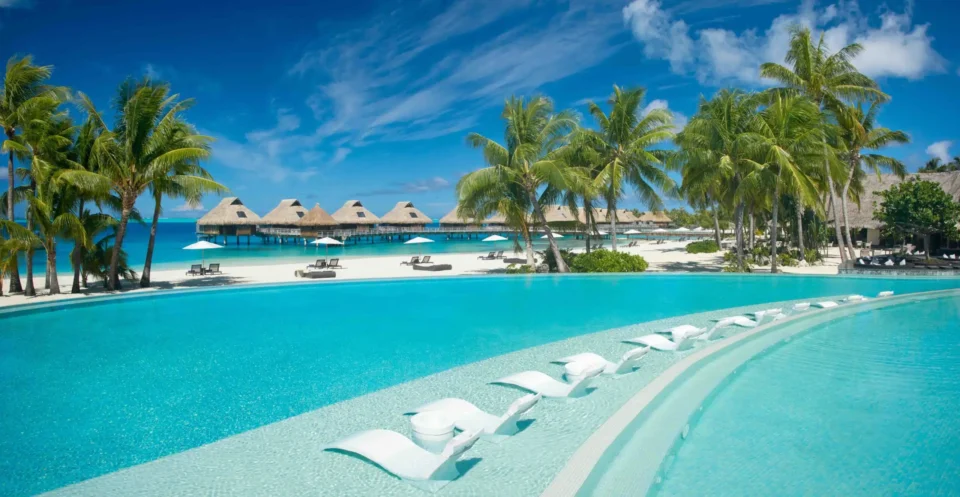
Ask ten people what to do in Bora Bora and eight will describe the same photo: an overwater bungalow, glass floor, turquoise water underneath. That photo is real. It’s also not an island. Bora Bora is a 12 square mile lagoon ringed by a barrier reef, with the main island’s jagged peaks, Mount Otemanu and Mount Pahia, rising out of the middle of it. Almost everything worth doing happens on or in that water.
I’ve talked to guides who run lagoon tours here for a living, and the same complaint comes up constantly: guests book the bungalow, then scramble on day two to figure out what fills the rest of the trip. So, here’s the version built around what you’ll do, not what gets sold on the resort homepage.
Start in the Water, Because That’s Where the Island Actually Lives
If you do just one thing in Bora Bora, go for a lagoon tour, either a half day one or do the whole stretch. It really kind of lives up to the hype, honestly. The boats pull up at a few different spots. First, you slide into shallow water where blacktip reef sharks and stingrays drift right at your feet. Then it’s off to a coral garden teeming with around 700 kinds of fish. The water’s so clear you feel like you’re drifting in glass, not really swimming. Some tour guides just let you watch the animals (no feeding tricks), and that’s the way to go—ask about that before you book.
The Bora Bora Lagoonarium adds a slightly different version of the same idea. It’s a natural aquarium built into a section of the lagoon itself on a small motu, not a tank, and you snorkel there under a wildlife guide watch. Most full-day tours end with a motu picnic, usually grilled fish and fruit, feet in the sand, no schedule.
The Hikes Nobody Puts on the Postcard
Mount Otemanu dominates every photo taken on the island, but it’s a technical climb, not a casual walk, and most visitors view it rather than summit it. Mount Pahia, its smaller neighbor, is the one people actually hike for a sunset payoff. There’s also a short, free trail from the eastern edge of Matira Beach up to an old WWII coastal gun position, an easy walk with a genuinely good view across the lagoon toward Motu Toopua. No booking, no guide, no cost.
Matira Beach Is Where Everyone Ends Up, and Here’s Why
Matira is the only public beach on the main island, and the local’s kind call part of it “the aquarium” because you can wade a few meters out and end up surrounded by reef fish, not on a tour boat. The sand feels soft, the water is shallow and warm enough for kids, and Bloody Mary’s, that well known seafood spot that’s been serving since 1979, with a wall of celebrity names right at the entrance, sits just up the coast. In the late afternoon, after the day-boats are done leaving, is the calm stretch locals say is the real sweet spot.
A Day That Costs Almost Nothing
Vaitape, the main village, has this little market by ferry dock, where they sell shell jewelry, monoi oil, vanilla, and pareos, plus a couple of food trucks (roulottes) for a cheap-is dinner. Then you add in a free morning at Matira, the WWII trail hike, and later sunset over Matira Point, and suddenly you got a whole day that feels packed, without opening your wallet once.
Frequently Asked Questions
Q: What is Bora Bora actually known for?
A: Overwater bungalows get the marketing, but the island’s real reputation is the lagoon itself, calm, warm, reef-protected water that makes snorkeling and swimming easy for almost any skill level.
Q: How many days do you need in Bora Bora?
A: Three days cover the highlights. Five to seven lets you add a motu day, a hike, and enough downtime that the trip doesn’t feel rushed.
Q: Is Bora Bora good for people who don’t swim well?
A: Yes. Matira Beach has a shallow, sandy, coral-free bottom, and most lagoon tours provide flotation and stay in waist to chest-deep water at the snorkel stops.
Q: Can you do Bora Bora on a tighter budget?
A: It’s possible but takes planning. Staying in a guesthouse instead of an overwater bungalow, eating from roulottes in Vaitape, and sticking to Matira Beach and free hikes keep daily costs far lower than the resort packages.
Q: What’s the best time of year to visit?
A: May through October is the dry season, with calmer seas and less rain, which matters most if snorkeling and boat tours are the priority.
The Actual Takeaway
Bora Bora kind of rewards people who plan around the lagoon instead of the bungalow, like it sort of expects you to move with the tide. If you want a working starting point, try building your trip out from what to do in Bora Bora, outward—start with one snorkel tour, one hike, one free beach day, and then a motu picnic if your budget allows. Everything else is just a bonus, even if it feels extra.
